What Kind of Water Pipes Does Your Tustin Home Have? How to Identify Copper, Galvanized, CPVC, PEX and Polybutylene

Knowing your pipe material tells you how long it may last and what problems to expect. A simple look-and-scratch guide to identifying supply lines in Old Town, Tustin…
Before you can decide whether your plumbing needs repair or replacement, you need to know what it is made of. You do not need special tools. A flashlight, a magnet and a coin are enough to identify most water supply pipes in a Tustin home.
Where to look
Check the main line where it enters the house, often near a hose bib or the garage. Look at the lines above the water heater, under kitchen and bathroom sinks, and in the attic if you can get there safely. Homes that have had repairs may have more than one material.
Copper
Copper looks like a penny when new and turns dull brown, sometimes with green spots, as it ages. Joints are soldered. A magnet will not stick. Copper was the standard in many homes from the 1960s through the 1990s and is common across Tustin.
Galvanized steel
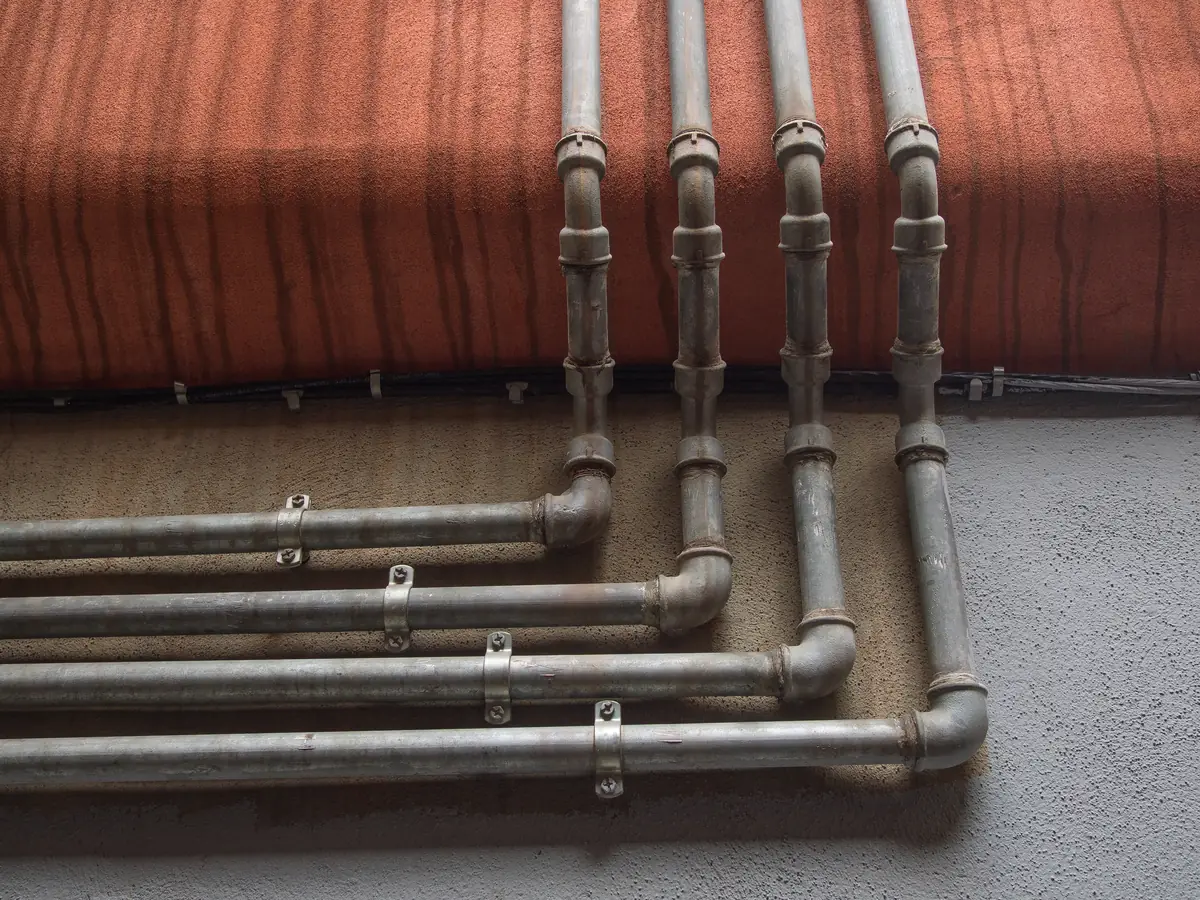
Galvanized pipe is dull silver-gray, heavy and joined with threaded fittings. A magnet will stick firmly. It was common in homes built before the 1960s and often clogs with rust inside, causing low pressure and brown water.
CPVC
CPVC is a rigid plastic, usually cream or tan, joined with glued fittings. It turns brittle with age in some homes and can crack when bumped.
PEX
PEX is flexible plastic tubing, often red, blue or white, with printed markings along its length. Fittings are brass or plastic held with rings or crimps. It is the most common choice for repipes today.
Polybutylene
Polybutylene is gray, sometimes blue or black, flexible plastic used in some homes built from the late 1970s to the mid-1990s. Fittings are often crimped with copper or aluminum rings. It has a known history of failure and is a strong reason to repipe.
Lead
Lead is dull gray, soft and will show a shiny silver mark when scratched with a coin. A magnet will not stick. It is rare in Southern California homes but worth ruling out in very old houses.
Tustin homes by era
Older homes in Old Town and some early tracts may still have galvanized lines or a mix of galvanized and copper. Tustin Meadows and many 1960s and 1970s neighborhoods were built largely with copper. Tustin Ranch homes from the 1980s and 1990s are mostly copper, while newer homes at Tustin Legacy often use PEX. Water comes from the City of Tustin or Irvine Ranch Water District depending on the area.
What to do next
If you find galvanized, polybutylene or heavily corroded copper, a PEX-A repipe replaces the supply lines from the main to every fixture. Work is permitted and inspected through the City of Tustin.
Related reading
Read what causes brown water from a faucet or whether PEX is legal in California. Neighbors can visit Irvine, Costa Mesa and Lake Forest, or see every city we serve at repipeinc.com.
Not sure what is in your walls?
We will identify your pipes and explain your options as part of a free quote. Get my free quote. Our AI system alerts a technician instantly, so you get a fast callback.
Repipe OC, 23821 Hillhurst Drive, Laguna Niguel, CA 92677, (949) 524-2362, CSLB #1087885 C-36.
Repipe OC near you
Not in Tustin? The same crew serves nearby cities. See the Repipe OC hub (repipeinc.com), or jump to a neighboring city:
 Written by Repipe OC · CSLB #1087885 C-36 · 23821 Hillhurst Drive, Laguna Niguel, CA 92677 · (949) 524-2362