PEX Bend Radius Explained: Why Gentle Curves Matter in Tustin Repipes
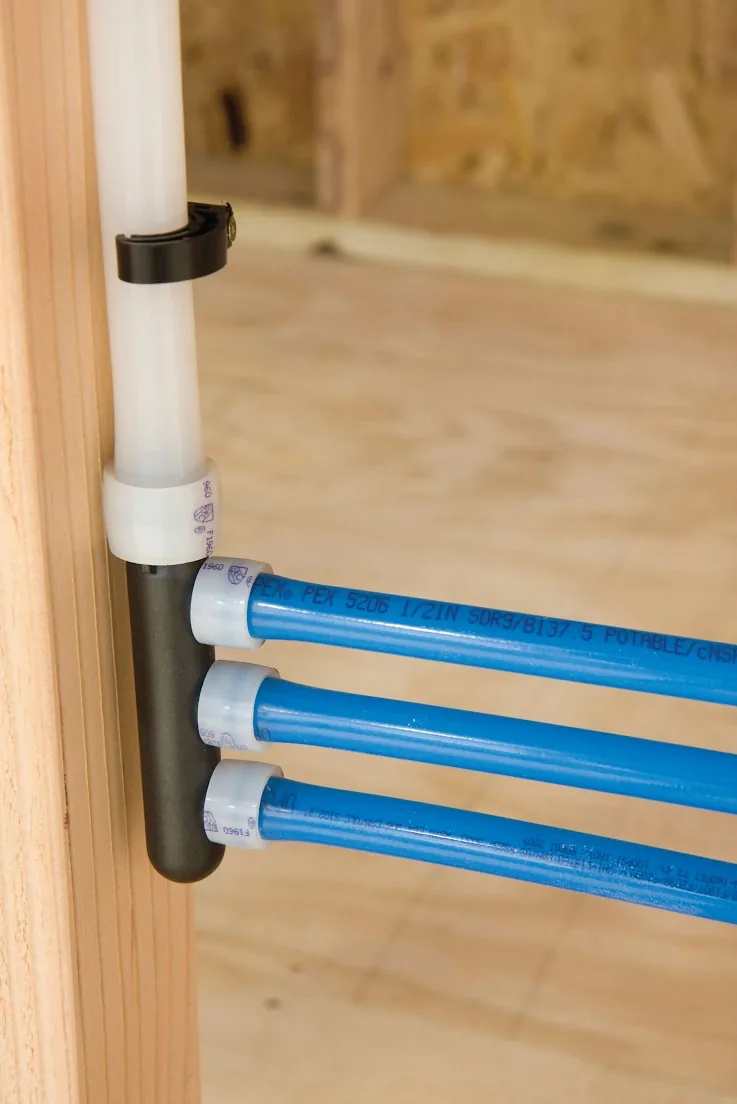
PEX bends around corners, but only so far before it kinks or strains. Here is what bend radius means and how Tustin homeowners can recognize a careful installation.
One of PEX's biggest advantages is that it bends. It can curve around framing and through walls with fewer fittings than rigid pipe. That flexibility has limits, though, and a bend that is too tight can kink the tubing or put stress on it over time. Tustin PEX bend radius is a small technical detail that says a lot about the quality of a repipe. This guide explains what bend radius means, why it matters and how to spot good practice when you look at PEX bend radius in Tustin homes.
What bend radius means
Bend radius describes how tightly a pipe can curve. Picture the bend as part of a circle. The radius is the distance from the center of that circle to the pipe. A small radius means a sharp curve, while a large radius means a gentle one. Every PEX product has a minimum bend radius listed by its manufacturer, often expressed as a multiple of the pipe's outside diameter. Many manufacturers list a minimum of about six times the outside diameter for bends made without support, with tighter bends allowed when a bend support is used. Bends made against the natural coil of the tubing may need a larger radius.
Why tight bends cause trouble
When PEX is bent beyond its limit, the wall can flatten or fold into a kink. A kink restricts flow, which can reduce pressure at the fixture it serves. It also concentrates stress in one spot. Even when a tight bend does not kink right away, it can leave the tubing under constant strain, which is not what the manufacturer designed for.
Bends that start right at a fitting are another concern. A fitting is rigid, and a curve that begins immediately at its edge pulls on the joint. Manufacturers usually call for a straight section of tubing before a bend begins.
Temperature affects bending as well. PEX is stiffer when it is cold and more pliable when it is warm, so installers may let coils sit in a warm space before working with them. Forcing cold tubing into a tight curve raises the risk of a kink, which is one more reason to plan routes that allow gentle bends.
Tools that help PEX bend correctly
Installers use a few simple tools to keep bends within limits:
- Bend supports. These are metal or plastic forms that hold PEX in a tight, controlled curve, often where tubing comes out of a floor or wall to meet a fixture.
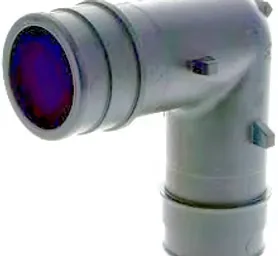
- Elbow fittings. When a turn is too sharp for the tubing to make on its own, a fitting can change direction instead.
- Proper hole placement. Drilling holes through framing in a line that lets the pipe curve gradually avoids forcing sharp turns.
Repairing a kink
Kinked PEX is usually cut out and replaced with a new section and fittings. Some PEX-A products allow a kink to be repaired with gentle heat, following the manufacturer's instructions exactly, because of how that material recovers its shape. Other types of PEX generally do not allow heat repair. Repipe OC installs Uponor PEX-A, which uses expansion fittings. Whatever the product, the manufacturer's guidance decides which repair is acceptable.
Tustin PEX bend radius in local homes
Tustin's housing ranges from older homes in Old Town Tustin and nearby neighborhoods to the 1970s through 1990s homes of Tustin Ranch and the newer construction at Tustin Legacy. In older homes, a repipe often means fishing new tubing through existing walls and attics, where tight framing and old plaster can make gentle curves harder to plan. Newer homes may have more open attic space but longer runs. In either case, PEX bend radius in Tustin repipes comes down to careful routing and the right supports.
What homeowners can check
You can look for a few signs of careful work in exposed areas like attics, garages and under sinks:
- Smooth, gradual curves with no flattened or folded spots.
- Bend supports where pipe turns sharply at stub-outs.
- Straight sections leading into fittings.
- Pipe secured at regular intervals so it does not sag or rub.
Asking about Tustin PEX bend radius during a repipe is a simple way to learn how carefully the job will be planned.
Quick takeaways
- Every PEX product has a minimum bend radius set by its manufacturer.
- Tight bends can kink tubing, reduce flow and add stress.
- Bend supports and elbow fittings handle sharp turns.
- Look for smooth curves and straight runs into fittings.
Related reading
On this site, see identifying your plumbing pipe type and galvanized pipe versus PEX. Neighbors can visit Irvine, Costa Mesa and Lake Forest, or browse every city at repipeinc.com.
Questions about PEX bend radius in Tustin?
Request a free quote and talk with a licensed C-36 plumbing contractor about new water piping for your home. Get my free quote. Our AI system alerts a technician instantly, so you get a fast callback.
Repipe OC, 23821 Hillhurst Drive, Laguna Niguel, CA 92677, (949) 524-2362, CSLB #1087885 C-36.
Repipe OC near you
Not in Tustin? The same crew serves nearby cities. See the Repipe OC hub (repipeinc.com), or jump to a neighboring city:
 Written by Repipe OC · CSLB #1087885 C-36 · 23821 Hillhurst Drive, Laguna Niguel, CA 92677 · (949) 524-2362