PEX vs Polybutylene Pipe: What Tustin Homeowners Should Know
Both are flexible plastic water pipes, but their track records are very different. Here is how Tustin homeowners can tell them apart and why it matters.
At a glance, polybutylene and PEX look like close cousins: both are flexible plastic tubing used for water supply lines. Their histories, though, could hardly be more different. This guide compares the two, explains how to identify Tustin polybutylene pipe, and covers why so many owners replace it. If you think you have polybutylene pipe in Tustin, a quick look in the garage or attic is a good place to start.
What polybutylene is
Polybutylene is a plastic resin pipe that was widely installed in the United States from the late 1970s into the mid-1990s. It was inexpensive and easy to install, and builders used it in many new homes and remodels. Over time, failures became common. Research and litigation pointed to the pipe and its fittings breaking down when exposed to disinfectants in tap water, which could make the material brittle and prone to sudden leaks. A large class-action settlement in the 1990s covered many failed systems, and the pipe stopped being used in new construction.
Polybutylene was attractive to builders because it was flexible, fast to run through framing and less costly than copper at the time. Many homes received it during original construction, and others had it added during remodels or repairs, sometimes alongside older copper or galvanized sections. That mix can make a home's plumbing harder to read, since one part of the house may have polybutylene while another does not.
Failures did not always appear quickly. Some systems lasted many years before leaks began, which is why the pipe still turns up in homes today. The fittings were often the weakest point, and leaks sometimes started at joints hidden inside walls or ceilings.
What PEX is
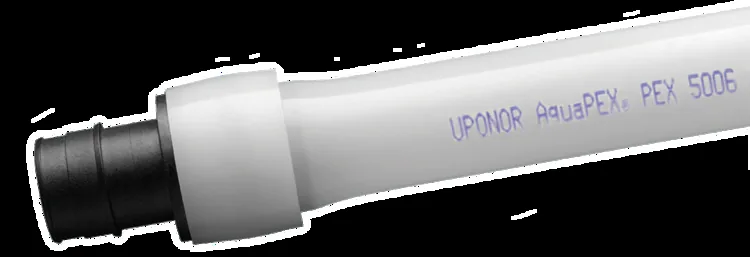
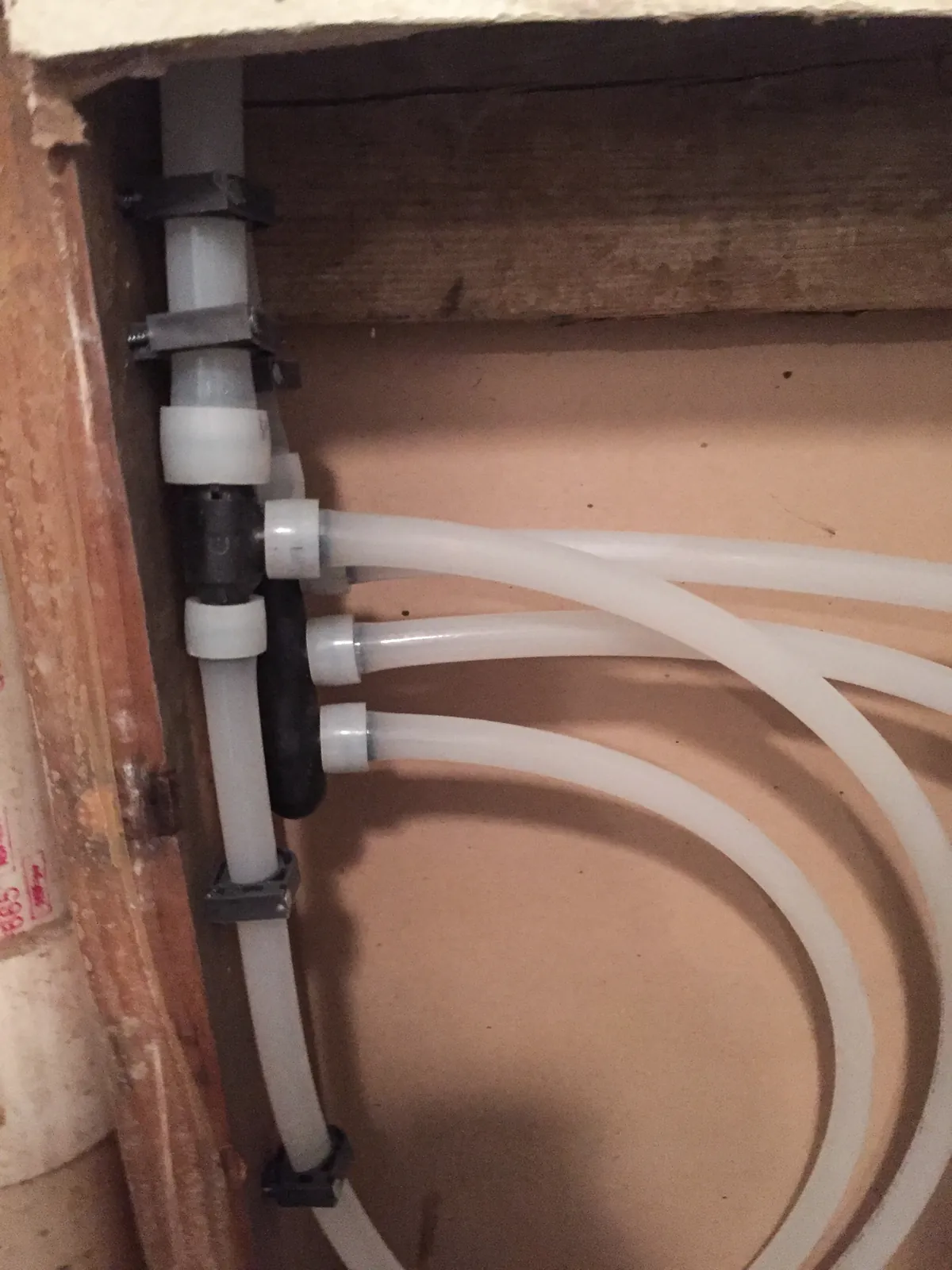
PEX is cross-linked polyethylene. The cross-linking process changes the plastic's molecular structure, making it more resistant to heat, pressure and chemical attack. PEX is approved for drinking water in California and is widely used in new homes and repipes. There are several manufacturing methods, each marked with a letter on the pipe. Repipe OC installs Uponor PEX-A, which uses expansion fittings.
How to tell them apart
- Color: polybutylene is most often gray, sometimes blue or black. PEX is commonly red, blue or white.
- Markings: polybutylene is usually printed with codes such as PB2110. PEX is printed with "PEX" and its standards.
- Fittings: polybutylene systems often used plastic or copper crimp fittings with aluminum or copper bands.
- Location: look where pipes enter the water heater, at the main shutoff, in the attic, or under sinks. Short stub-outs at walls can be misleading, since they may be copper even when the pipe inside is polybutylene.
Why the difference matters
Polybutylene can fail without warning, often at fittings, and leaks in walls or attics can cause major damage before they are found. Many insurers ask about it, and buyers often raise it during home inspections. PEX, by contrast, has a long record in modern plumbing, though it still needs proper installation and protection from sunlight.
Polybutylene pipe in Tustin homes
Tustin's housing spans many eras. Old Town Tustin and nearby streets include older homes, many neighborhoods north of the 5 freeway date to the 1950s and 1960s, and Tustin Ranch was built largely in the 1980s and 1990s, during the period when polybutylene was in use. Homes from that era, along with older homes remodeled in those years, are where Tustin polybutylene pipe is most likely to turn up. Newer construction in Tustin Legacy is unlikely to have it.
If you find polybutylene
Do not panic, but do plan. Check exposed sections and fittings for discoloration, flaking or white residue. Take photos and note the locations. Ask your insurance company how it affects coverage. Many owners choose to replace the system on their own schedule rather than wait for a leak, since a planned replacement is easier than an emergency repair.
PEX vs polybutylene at a glance
- Polybutylene: installed late 1970s to mid-1990s, prone to brittle failure, no longer used.
- PEX: cross-linked for strength, approved for drinking water, widely used today.
- Both are flexible, but only PEX is installed in modern repipes.
Keep notes on what you find, so a licensed plumber can confirm whether you have polybutylene pipe in Tustin homes and talk through options.
Quick takeaways
- Polybutylene is usually gray and marked PB2110.
- It was used from the late 1970s to the mid-1990s and is prone to failure.
- PEX is cross-linked, approved in California and used in modern repipes.
- Tustin Ranch-era homes are worth checking for polybutylene.
Related reading
On this site, see identifying your pipe type and galvanized pipe vs PEX. Neighbors can visit Irvine, Costa Mesa and Lake Forest, or browse every city at repipeinc.com.
Questions about polybutylene pipe in Tustin?
Request a free quote and talk with a licensed C-36 plumbing contractor about the pipes in your home. Get my free quote. Our AI system alerts a technician instantly, so you get a fast callback.
Repipe OC, 23821 Hillhurst Drive, Laguna Niguel, CA 92677, (949) 524-2362, CSLB #1087885 C-36.
Repipe OC near you
Not in Tustin? The same crew serves nearby cities. See every city we serve, or jump to a neighboring city:
 Written by Repipe OC · CSLB #1087885 C-36 · 23821 Hillhurst Drive, Laguna Niguel, CA 92677 · (949) 524-2362